Kuroto Fund, L.P. - Q2 2026 Letter
Dear Partners and Friends,
PERFORMANCE
Kuroto Fund was up +3.5%, net of all fees, in the second quarter of 2026, and finished the first half of 2026 up +32.0%. By comparison, the MSCI Emerging Markets Index returned +24.2% in the quarter and finished up +24.0% for the first half of the year. The MSCI Frontier Markets Index was up +11.2% in the second quarter and up +10.2% for the first half of 2026.
Performance in the second quarter was led by strong returns of Guaranty Trust, MTN Ghana, and UAC Nigeria, the last of which we will discuss in greater detail in this letter. These significant gains in our largest African equity holdings were partially offset by the pullback in several of our energy sector holdings. Our portfolio also suffered from the continued sell-off in the Brazilian equity market. We are using this weakness as an opportunity to deploy capital countercyclically into a handful of world-class businesses.
Revisiting UAC Nigeria
We recently returned from a trip to Nigeria and Ghana where we visited the management teams of several of Kuroto Fund’s long-term investments. One of those investments, United Africa Company of Nigeria (UACN), has appreciated significantly, entering the top 5 by position size for the first time. Given the meaningful contribution to return and large position size, we thought it would be timely to review the investment and learnings from our latest site visit.
In the 1920s and 1930s, Lever Brothers Limited established the United Africa Company to facilitate trade in the region, mainly supplying palm oil for their soap operations. In 1974, the Nigerian subsidiary UACN became one of the first publicly listed stocks in the country. Today, it is one of the premier Nigerian companies with an iconic headquarters in Lagos. In the 1990s, Lever Brothers Limited, now known as Unilever, fully exited its shares and UACN diversified into several unrelated businesses, including property development, snack foods (sausage rolls and ice cream), paint, animal feeds, restaurants, and logistics.

While segments like snack foods and paints were quite strong and well-positioned, others struggled. Management had added so much debt to the real estate development arm that by the late 2010s the solvency of the entire group was in question.
In 2018, activist investor Themis Capital took control of UACN. The two key individuals at Themis Capital were Fola Aiyesimoju, a young Nigerian who had worked at KKR and Standard Bank of South Africa, and Khalifa Biobaku, a former managing partner at Blakeney Management, a London-based institutional investor. Themis Capital, which was well-funded by former emerging market portfolio managers from the US and UK, took an aggressive owner-operator approach. They quickly got to work fixing UACN, starting with the operating teams and the over-levered property business. The property business turned out to be worse than advertised, taking several years to unwind and ultimately requiring a 50% sale to a local insurance company to repair the balance sheet.
While working on the property business, the Themis Capital team aggressively upgraded the UACN leadership ranks across subsidiaries, focusing on hiring people who were young, hungry and local rather than older, more experienced expats. They also continued to improve the balance sheet in preparation for future M&A opportunities. Amidst this intensive internal restructuring, the Nigerian economy struggled through the impacts of COVID, which included an oil price crash and capital controls. UACN fought to maintain and improve the business through this time.
We had followed UACN since our first meeting with the conglomerate back in 2014. We were aware they had several outstanding businesses but ultimately had been scared off by issues in the property development arm. When the Themis Capital team joined in 2018, we met them and were impressed but felt they had a lot to do and wanted to see them fix the property arm first. Fast forward to 2021, and the value of the business (in US dollars) had declined significantly given the difficult position Nigeria was in, and we capitalized on this incredibly low valuation to initiate our investment. We continued to increase our investment through 2023, eventually becoming the second largest shareholder after Themis. The stock continued to decline throughout this period and by April of 2023 was as low as a $23 million market cap with close to that much in net cash on its balance sheet.
Following the election of President Tinubu in 2023, Nigeria started to recover, and the now-right-sized UACN businesses were well-positioned to capitalize on the moment. In 2024, with a much-improved balance sheet, UACN submitted the winning bid for Coca-Cola’s sale of its Nigerian juice and dairy business, called Chi Limited, which owned brands such as Chivita and Hollandia. As we saw with our Nigerian oil & gas investment, Seplat Energy, and its opportunistic acquisition of ExxonMobil’s divestiture in 2022, UACN was able to capitalize on Coca-Cola's ill-timed departure.
Coca-Cola had originally invested in Chi Limited in 2016 to diversify away from soda, only to turn around seven years later and decide they were non-core. Coca-Cola wanted a credible local buyer to reduce the risk of the deal failing to close. During the bidding process, the dairy and juice operating margins deteriorated, causing other bidders to reconsider, but UACN stuck with their bid, confident they could turn the business around given their operational expertise in several similar businesses in their portfolio. Where Coca-Cola had at one point valued this business at close to $600 million, UACN was able to acquire it for around $120 million.
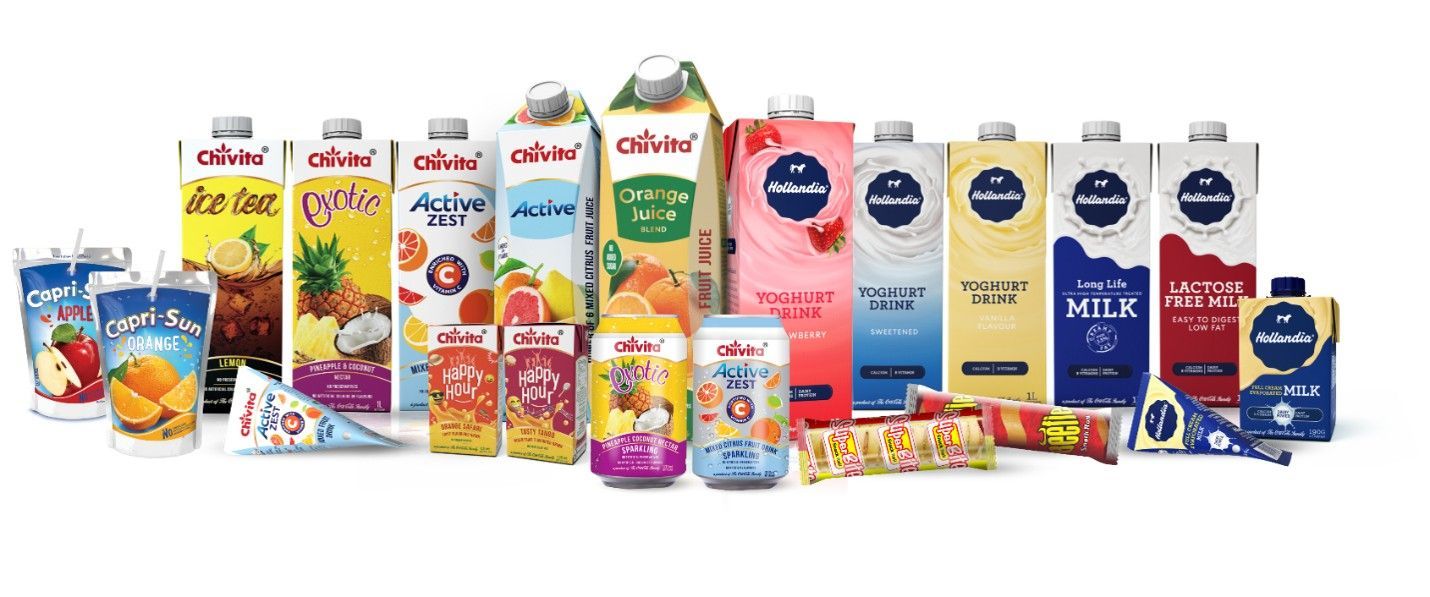
The acquisition value was nearly twice the market cap of UACN at the time and represented more than two-thirds of the pro forma revenue and operating profits of the combined entity. Importantly, UACN was able to fund the deal with debt and cash on hand. As a result of the transaction, UACN multiplied its economic value overnight.
The acquisition has proved timely, and UACN’s stock has dramatically re-rated. On the operating level, the Themis Capital team removed the expat management and installed local UACN managers to run the business, including putting in Themis’ own Fola Aiyesimoju as the division CEO. This has worked well thus far. At the time of acquisition, margins in the purchased business were historically depressed. The change in management combined with the normalization of operating conditions in the country has allowed UACN to elevate the juice and dairy division operating margins from 4% back to north of 15%. If they can continue to operate at these levels, the company is still attractively valued at less than a 10x 2027 P/E multiple. Looking ahead, dairy consumption in Nigeria is rebounding from one of the lowest levels anywhere in the developing world, and the juice business should benefit from rising consumer incomes and Chivita’s strong brand in the category.
UACN is now a collection of some of the best brands in the country and is led by a hungry and now experienced leadership team. With the Nigerian consumer starting to recover from a decade-long malaise, UACN is well-positioned to grow the business and become one of the go-to consumer-oriented stocks in Africa.
organizational Update
In May, we added Roman Fuzaylov to our investment team. Roman has 20 years of experience as an investor across frontier and emerging markets. He started his career as a junior analyst at Prince Street Capital in 2006 and eventually became a partner and portfolio manager of their Tamerlane Fund, a regional mandate focused on Emerging Europe, Middle East, and Africa. More recently, he was a co-portfolio manager of the Helios Seven Rivers Fund, a joint venture with Helios Investment Partners that focused on public markets investing across the African continent. Roman originally hails from Uzbekistan, is fluent in Russian, and is very well aligned with our long-term, fundamental approach to investing.
In April, we hired Luca Grandinetti as a junior operations analyst. In addition to providing versatile support across our operations and middle-office functions, Luca has been instrumental in our firm-wide efforts to centralize and organize the data around portfolio company corporate governance during proxy season. Prior to joining us, Luca worked at the Mitsui Group and Mirador, Inc.
Sincerely,
Sean Fieler & Brad Virbitsky
[1] Please note that estimated performance has yet to be audited and is subject to revision. Performance figures constitute confidential information and must not be disclosed to third parties. An investor’s performance may differ based on timing of contributions, withdrawals and participation in new issues.
Unless otherwise noted, all company-specific data derived from internal analysis, company presentations, Bloomberg, FactSet or independent sources. Values as of 6.30.26, unless otherwise noted.
This document is not an offer to sell or the solicitation of an offer to buy interests in any product and is being provided for informational purposes only and should not be relied upon as legal, tax or investment advice. An offering of interests will be made only by means of a confidential private offering memorandum and only to qualified investors in jurisdictions where permitted by law.
An investment is speculative and involves a high degree of risk. There is no secondary market for the investor’s interests and none is expected to develop and there may be restrictions on transferring interests. The Investment Advisor has total trading authority. Performance results are net of fees and expenses and reflect the reinvestment of dividends, interest and other earnings.
Prior performance is not necessarily indicative of future results. Any investment in a fund involves the risk of loss. Performance can be volatile and an investor could lose all or a substantial portion of his or her investment.
The information presented herein is current only as of the particular dates specified for such information, and is subject to change in future periods without notice.